Down into the clay
Electric trains made it possible to dig far below the streets.
How this site works. Every fact is in our own words and linked to its source, beside it. Where good sources disagree, we show each version in a “Sources differ” box.
Tunnels under the river
Marc Isambard Brunel’s Thames Tunnel, the world’s first tunnel under a river, opened between Wapping and Rotherhithe in 1843. LT Museum, Victorian
James Greathead’s tunnelling shield was pushed forward through the clay, and the tunnel behind it was lined with cast-iron rings to make a ‘tube’. LT Museum, Victorian
London’s Underground is often called the Tube because of the shape of its tunnels. Britannica
1890: the first deep tube
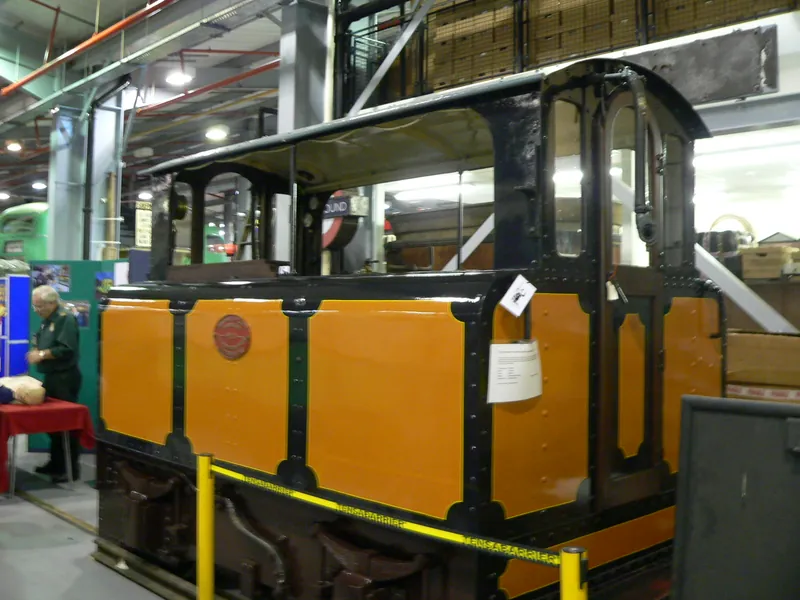
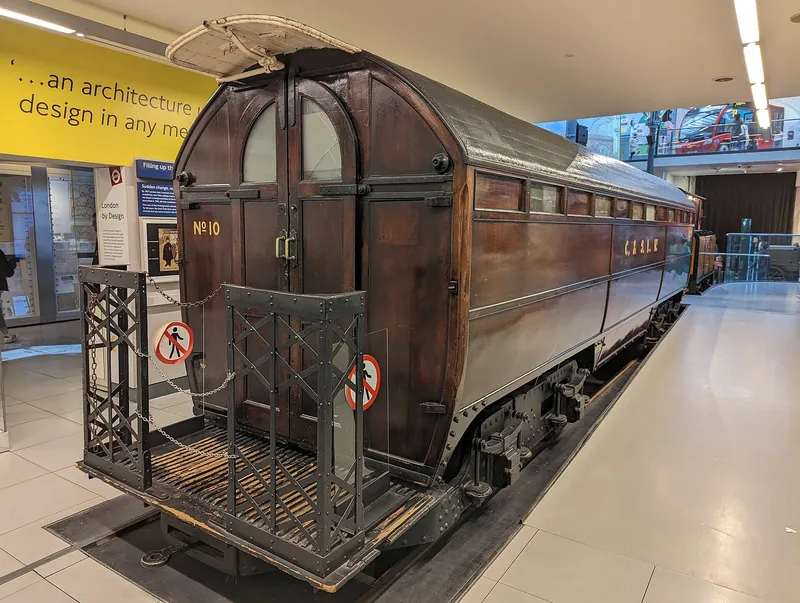
The City & South London Railway, the world’s first deep-level electric railway, opened in November 1890, between King William Street in the City and Stockwell. LT Museum, Victorian
Every journey on it cost the same fare of twopence. Britannica
Its carriages had tiny windows near the roof, as it was thought passengers would not need to see out; they were nicknamed ‘padded cells’. LT Museum, Victorian
It was so busy at rush hour that Punch magazine called it the ‘sardine box railway’. LT Museum, Victorian
More tubes
The two-station Waterloo & City opened in 1898; it was nicknamed ‘the Drain’. TfL
The Central London Railway opened on 30 July 1900, from Bank to Shepherd’s Bush, for a flat fare of two old pence: the ‘Tuppenny Tube’. TfL
White City took its name when the Central line was extended to the 1908 Franco-British Exhibition, which drew 8 million visitors. TfL
From 1900 the American railway magnate Charles Tyson Yerkes built more tube lines and electrified the older ones. Britannica
The Bakerloo opened on 10 March 1906, and more than 36,000 people used it that day. Its name, a nickname for the Baker Street and Waterloo Railway, was made official in July 1906. TfL
Rumour has it the Bakerloo was built after businessmen complained they could not get to Lord’s Cricket Ground quickly enough. TfL
The Piccadilly opened on 15 December 1906, from Finsbury Park to Hammersmith. TfL
One Underground
In 1908 the separate companies began promoting the system together under the name ‘Underground’. LT Museum, short history
In 1933 all of London’s buses, trams, trolleybuses and Underground railways came under public ownership. LT Museum, short history
In 1933 the private companies were nationalised into one body, the London Passenger Transport Board. TfL
The Northern line was formed out of two railways, the City and South London and the Hampstead line, and got its name in 1933. TfL
Our view: the padded cells sum up the early tube. The engineering was brilliant and the passengers were an afterthought. It took the Underground name, the map and the roundel to make the tubes feel like one friendly system.
Building a tube train of your own? model.railways.im explains scale and gauge before you choose.
Next: the lines →