The first underground railway
Victorian London was jammed with traffic. The answer was to go under it.
How this site works. Every fact is in our own words and linked to its source, beside it. Where good sources disagree, we show each version in a “Sources differ” box.
A crowded city
London had about 1.7 million people when Queen Victoria was crowned in 1837, and the main-line railways of the 1840s and 1850s brought in even more. LT Museum, Victorian
Crossing London could take an hour and a half: five miles from Paddington to Bank by horse-drawn omnibus. LT Museum, Victorian
In 1846 a Royal Commission ruled that new railways should be kept out of the City and the West End. LT Museum, Victorian
For the wider story of the age that built it, and of the Victorian engineers behind its railways, see the engineers page on victorian.ages.im.
Charles Pearson’s idea
Charles Pearson, Solicitor to the City of London, championed an underground railway to link the main-line stations. LT Museum, Victorian
Britannica says Pearson proposed it as part of a plan to improve the city, soon after the Thames Tunnel opened in 1843. Britannica
Pearson’s plans and a rival group’s merged, and the Metropolitan Railway Company was formed in August 1854. LT Museum, Victorian
Objectors feared the tunnels would collapse under the traffic and that passengers would choke on the fumes from the engines. LT Museum, Victorian
The £1 million needed took five years to raise. LT Museum, Victorian
Cut and cover
Work began in 1860. LT Museum
It was built by ‘cut and cover’: a trench about ten metres wide and six metres deep was dug along the road, lined with brick walls and roofed with a brick arch, and the road was rebuilt on top. LT Museum, Victorian
Building it took nearly two years and caused huge disruption; one complaint said a great street had been ‘turned into a builder’s yard’. LT Museum, Met line
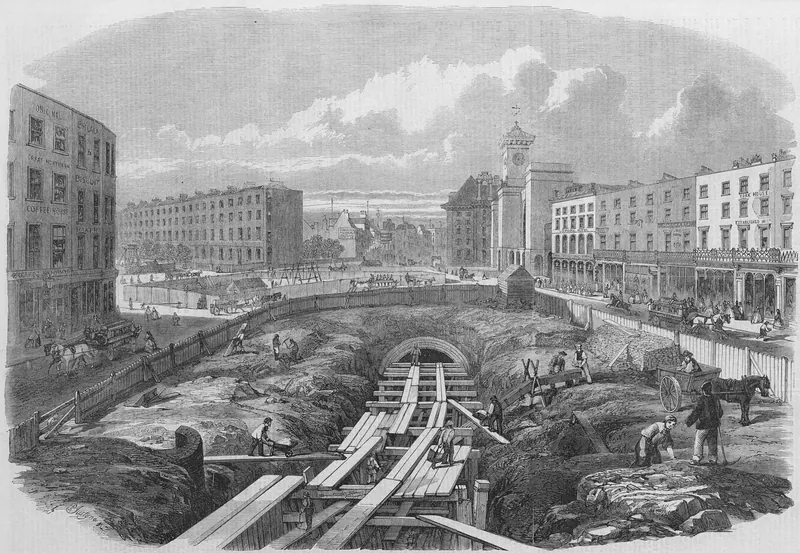
10 January 1863
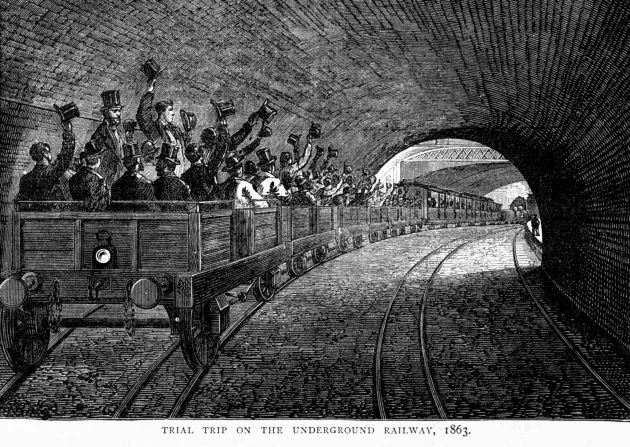
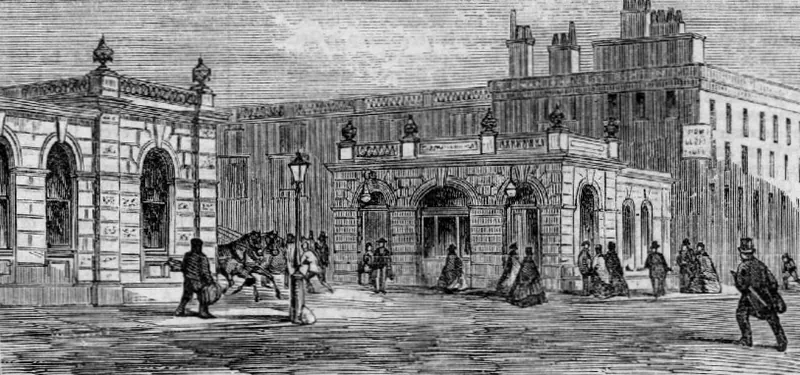
The first section of the Metropolitan Railway opened from Paddington to Farringdon on 10 January 1863. LT Museum
The Metropolitan line is the oldest underground railway in the world, named after the Metropolitan Railway. LT Museum, Met line
How long was the first line? Sources differ
- The London Transport Museum’s line history gives the first line as 5.6km long. LT Museum, Met line
- The museum’s story of Victorian transport says it ran for three miles under the New Road. LT Museum, Victorian
- Britannica says Parliament authorised 3.75 miles (6km) of underground railway. Britannica
Three figures from two respected sources: 5.6km is about 3.5 miles, a little more than “three miles” and a little less than 3.75 miles. Lengths depend on where you measure from, so we give all three.
How many stations? Sources differ
- The London Transport Museum says it opened with seven stations, from Paddington (Bishop’s Road) to Farringdon Street. LT Museum, Met line
- Transport for London says it opened between Paddington and Farringdon, serving six stations in between. TfL
Seven stations in all, counting both ends, would mean five in between. TfL’s “six intermediate stations” would make eight. We give both and have not settled it.
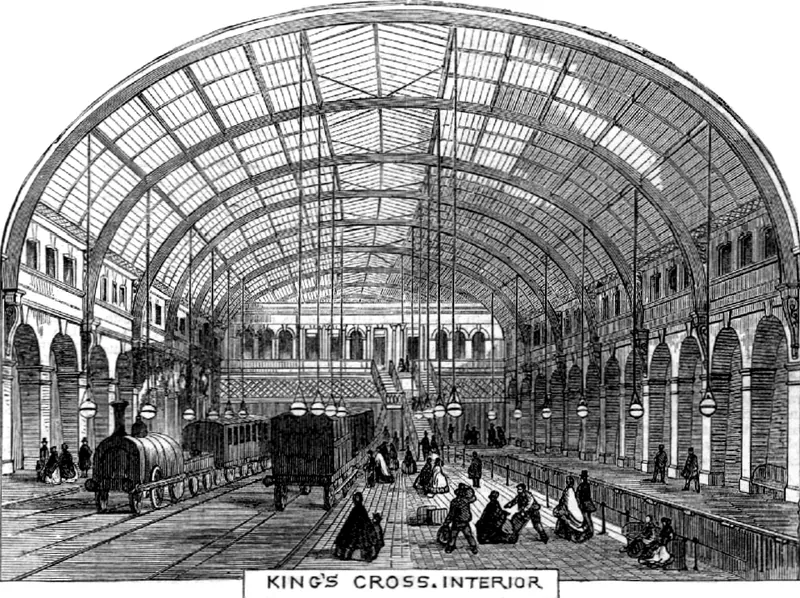
Steam underground
The first trains were pulled by steam locomotives burning coke and, later, coal. Britannica
Engines were fitted with water tanks to condense their steam, but the smoke and fumes stayed a problem. LT Museum, Victorian
Despite the fumes it was a success, carrying 9.5 million passengers in its first year. Britannica
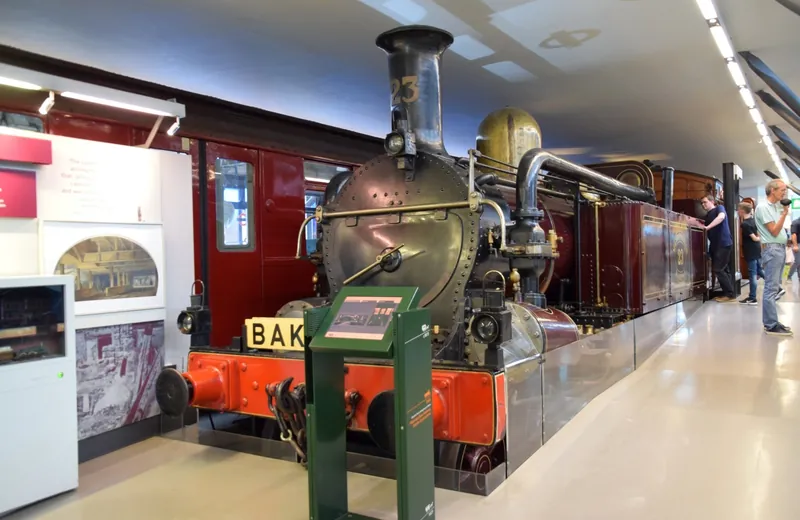
Metropolitan No. 23
Metropolitan locomotive No. 23, of 1866, is the only steam engine from the 1860s to survive, and is on show at the London Transport Museum. LT Museum
How did an engine like No. 23 work? steam.mechanics.im explains the steam locomotive step by step. Steam trains still carry passengers on the Isle of Man’s railways.
More lines
A second underground line, the District, opened five years later, in 1868. LT Museum
The District first opened on Christmas Eve 1868, between South Kensington and Westminster. TfL
The two companies fell out, and the Inner Circle linking the main-line stations was not finished until 1884. LT Museum
The Hammersmith and City Railway opened on 13 June 1864, as a branch feeding the Metropolitan; it became a line in its own right in 1988. TfL
Next: the deep tubes →