Eleven lines, and how they grew
From one steam line to a network reaching far into the suburbs.
How this site works. Every fact is in our own words and linked to its source, beside it. Where good sources disagree, we show each version in a “Sources differ” box.
Metro-land
The name ‘Metro-land’ was coined in 1915 to sell homes along the Metropolitan’s lines. LT Museum, Met line
In 1919 the Metropolitan Railway began building houses itself, through Metropolitan Railway Country Estates Limited. TfL
Metro-land was the subject of a 1973 BBC TV documentary presented by the Poet Laureate, Sir John Betjeman. TfL
Steam passenger trains ran on the Metropolitan beyond Rickmansworth until 1961. LT Museum, Met line
New lines
The Victoria line opened in stages from 1968 to 1971, the first new line across central London for more than 60 years. TfL
It was the world’s first automatic passenger railway: at the press of a button, the train closed its doors and drove itself to the next station. TfL
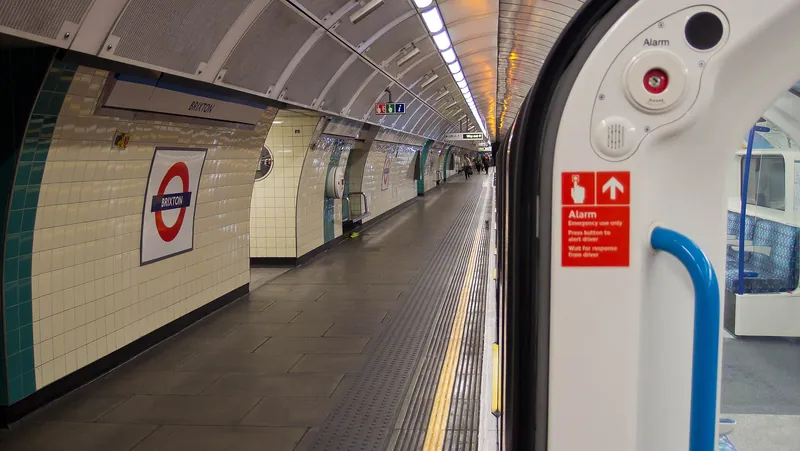
The Jubilee line opened on 1 May 1979, and was extended to Stratford through the Docklands in 1999. TfL
The Tube reached Heathrow Airport in 1977. LT Museum, short history
Heathrow Terminal 5 station opened in 2008. TfL
In 2021 the Northern line was extended to Battersea Power Station and Nine Elms, the first big Tube extension of the 21st century. TfL
The Waterloo & City became part of London Underground in 1994, making it, at the time, the Underground’s 12th line. TfL
Changes on the Circle
The name ‘Circle line’ first appeared on a poster in 1936, and the line got its own line on the Tube map in 1949. TfL
Since December 2009 the Circle line has not been a closed circle: it runs from Hammersmith to Edgware Road via Aldgate. TfL
Record breakers
Amersham is the highest station above sea level, at 147m. LT Museum, Met line
The longest gap between neighbouring stations is the 6.2km from Chesham to Chalfont & Latimer. LT Museum, Met line
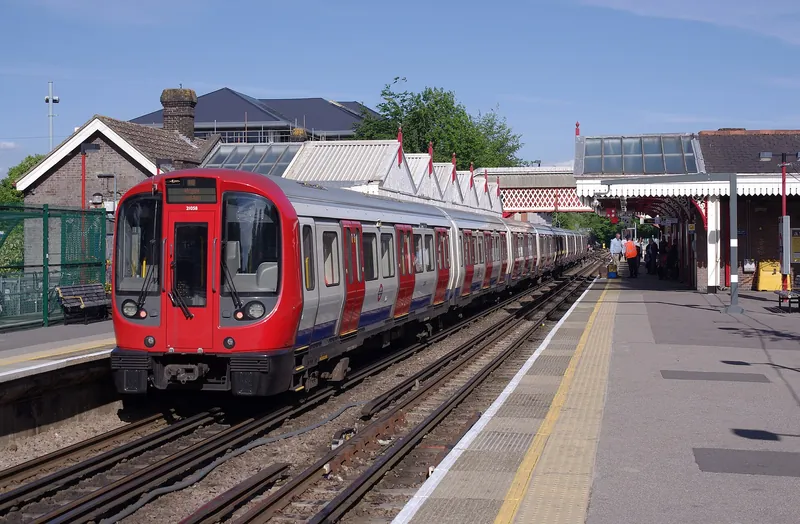
New Metropolitan line trains of 2012 were the first on the Underground with air conditioning and walk-through carriages. TfL
The Underground today
The Underground now has 11 lines covering 402km and serving 272 stations. LT Museum, short history
It handles up to five million passenger journeys a day. LT Museum, short history
At the busiest times more than 543 trains are running, and the busiest line runs 40 trains an hour. LT Museum, short history
In 2016/17, 1.37 billion journeys were made, more than two and a half times the post-war low of 498 million in 1982. TfL
All-night weekend services began on some lines in 2016. LT Museum, short history
London Underground became part of Transport for London in 2003. TfL
An automatic announcement warns passengers to ‘mind the gap’ between the train and the platform. Britannica
The Underground’s 150th birthday in 2013 was marked with a steam locomotive and 19th-century carriages running through central London. LT Museum, short history
How big is it? Sources differ, a little
- The Underground now has 11 lines covering 402km and serving 272 stations. LT Museum, short history
- Transport for London says the network has grown to 272 stations and 11 lines. TfL
- Britannica says it had about 400km of track and some 270 stations at the start of the 21st century, carrying more than a billion passengers a year. Britannica
The museum and TfL agree on 11 lines and 272 stations. Britannica rounds to about 400km of track and some 270 stations, as of the start of the 21st century. The small gap is about rounding and dates, not a real disagreement.
Next: the Tube map →